Wombats Poop in Cubes and Science Still Isn't Over It
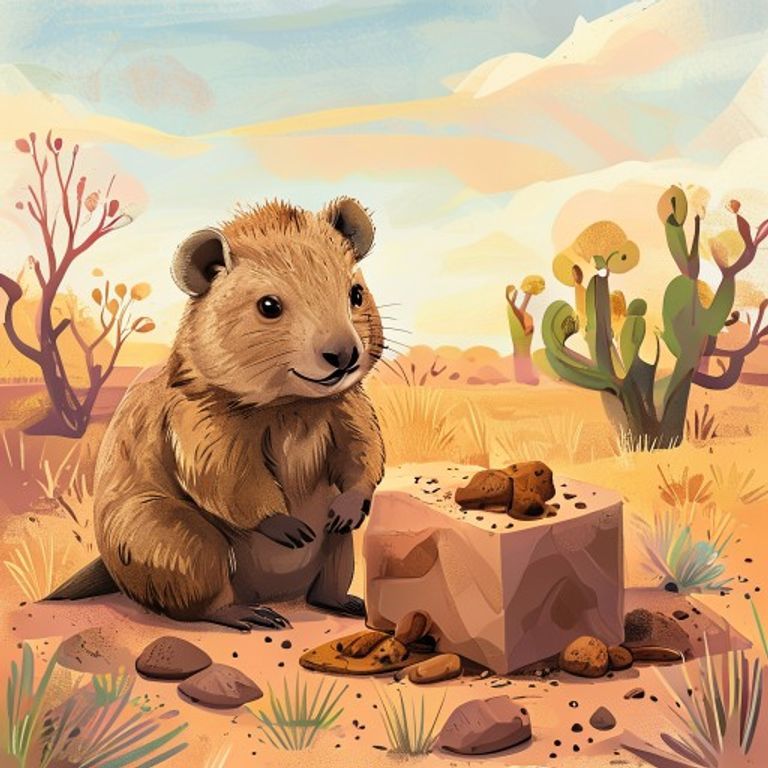
Meet the wombat: a chunky, burrowing marsupial from Australia that looks like a teddy bear had a very serious argument with a boulder. Wombats are beloved for their sturdy build, their surprisingly speedy waddle, and one deeply specific superpower — they poop in cubes.
No, really. Each wombat produces around 80 to 100 cube-shaped droppings per night. The cubes measure roughly two centimeters on each side, and wombats strategically place them on rocks and logs to mark their territory. Apparently, cube-shaped poop stacks better than round poop, which is either genius-level evolutionary thinking or the most chaotic fact you will learn this week.
For years, scientists were genuinely stumped. A cube coming out of a circular digestive tract seems to defy basic geometry. Then, in 2019, a team of researchers who won an Ig Nobel Prize for their trouble discovered the answer: the walls of a wombat's intestine have varying elasticity. Two stiff regions and two stretchy regions work like a natural mold, shaping the waste into tidy little blocks during the final stages of digestion.
It is a reminder that nature is wildly inventive — and that sometimes the strangest engineering problems have been quietly solved by a marsupial that just really likes to keep its territory organized.
More from Weird Facts
Weird Facts
Glass Frogs Hide Their Blood to Become Nearly Invisible
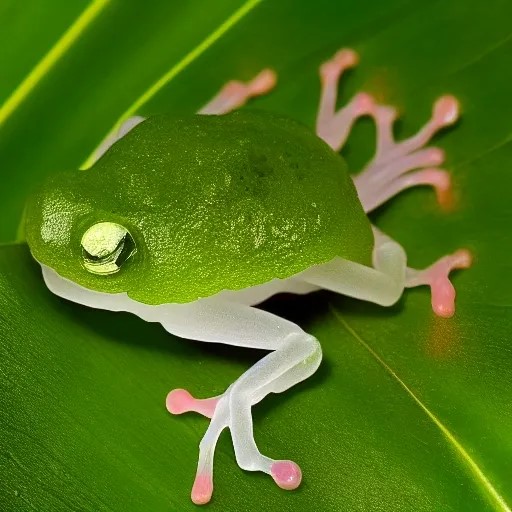
The glass frog has transparent skin that reveals its beating heart, but when it naps, it stashes 89% of its red blood cells inside its liver and practically vanishes.

Weird Facts
Humans Glow in the Dark, Just Too Faintly to See
Your body is emitting real visible-spectrum photons right now ? not heat, actual light ? but detecting it requires a camera sensitive enough to spot a candle from 10 miles away.

Weird Facts
Polar Bears Are Not Actually White — They're Transparent
Polar bear fur isn't white at all — every single hair is colorless and hollow, like a tiny fiber optic cable, and the skin underneath is completely black.
Weird Facts
T-Rex Never Met a Stegosaurus ? They Missed Each Other by 80 Million Years
The Stegosaurus went extinct roughly 83 million years before T-Rex even existed, making those two famous dinosaurs more separated in time than T-Rex and you.