Honey Never Expires: Egyptian Tombs Hid 3,000-Year-Old Honey Still Fit to Eat

Honey found in ancient Egyptian tombs — some dating back over 3,000 years — was reportedly still edible when archaeologists cracked the seals. That's not a typo or an exaggeration for effect. Three thousand years in a dark room, and the honey just sat there, completely unbothered, ready for a sandwich.
The secret lies in honey's genuinely remarkable chemistry. It is naturally acidic, has an extremely low water content, and produces small amounts of hydrogen peroxide over time. That triple combination makes it almost completely uninhabitable for bacteria and mold. Any microbe that wanders in essentially desiccates and gives up before it even gets started.
Sealed conditions in an Egyptian tomb happen to be ideal — cool, dark, and airtight. Bees didn't design their product with long-term archival storage in mind, but they accidentally nailed it anyway. They have been running what amounts to a self-preserving, zero-spoilage pantry system for tens of millions of years without a single food safety certification.
So next time you spot a jar of honey at the back of your cupboard with an expiry date stamped on the label, know that the date is entirely ceremonial. The honey is fine. The jar will rust before the honey turns. At this point, honey might just be the most reliable thing in your kitchen.
More from Weird Facts

Weird Facts
Glass Frogs Hide Their Blood to Become Nearly Invisible
The glass frog has transparent skin that reveals its beating heart, but when it naps, it stashes 89% of its red blood cells inside its liver and practically vanishes.

Weird Facts
Humans Glow in the Dark, Just Too Faintly to See
Your body is emitting real visible-spectrum photons right now ? not heat, actual light ? but detecting it requires a camera sensitive enough to spot a candle from 10 miles away.

Weird Facts
Polar Bears Are Not Actually White — They're Transparent
Polar bear fur isn't white at all — every single hair is colorless and hollow, like a tiny fiber optic cable, and the skin underneath is completely black.
Weird Facts
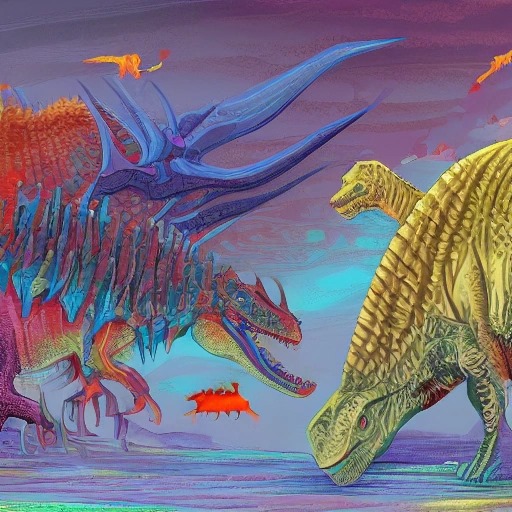
T-Rex Never Met a Stegosaurus ? They Missed Each Other by 80 Million Years
The Stegosaurus went extinct roughly 83 million years before T-Rex even existed, making those two famous dinosaurs more separated in time than T-Rex and you.