Koala Fingerprints Are So Human-Like They Can Fool Crime Labs
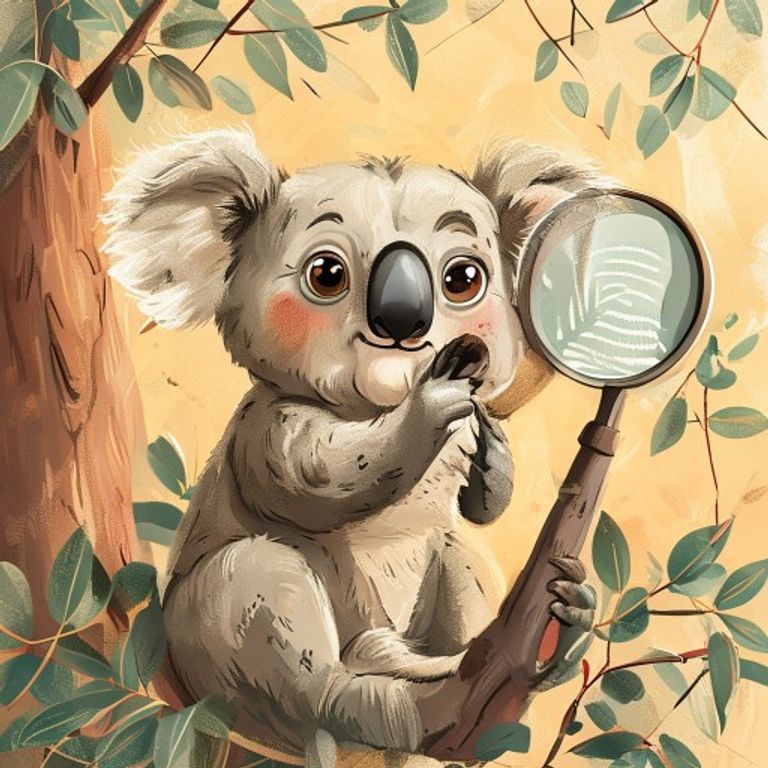
Imagine solving a murder, dusting for fingerprints, and finding a koala did it. Well, not quite, but koala fingerprints are so eerily similar to human fingerprints that forensic scientists have genuinely raised concerns about potential crime scene confusion. The resemblance is not just superficial — the loops, whorls, and arches are nearly identical, even under a microscope.
Here is the wild part: koalas and humans last shared a common ancestor about 70 million years ago. There was no fingerprint exchange program. They evolved this feature completely independently — a phenomenon called convergent evolution, where unrelated species develop the same trait because it solves the same problem.
What problem? Gripping. Koalas spend their lives climbing eucalyptus trees, and those fingerprint ridges help them grab slippery branches with remarkable precision. Humans use them for the same fundamental reason: handling objects. Both lineages, separated by tens of millions of years and an ocean, arrived at the exact same tactile solution. Evolution really does like to reuse its homework.
There are only three known cases of animals evolving such humanlike fingerprint patterns: humans, other primates, and koalas. Which means koalas have been quietly passing a very specific biometric test for millions of years. Scientists strongly advise them to stay away from crime scenes.
More from Weird Facts

Weird Facts
Humans Glow in the Dark, Just Too Faintly to See
Your body is emitting real visible-spectrum photons right now ? not heat, actual light ? but detecting it requires a camera sensitive enough to spot a candle from 10 miles away.

Weird Facts
Polar Bears Are Not Actually White — They're Transparent
Polar bear fur isn't white at all — every single hair is colorless and hollow, like a tiny fiber optic cable, and the skin underneath is completely black.
Weird Facts
T-Rex Never Met a Stegosaurus ? They Missed Each Other by 80 Million Years
The Stegosaurus went extinct roughly 83 million years before T-Rex even existed, making those two famous dinosaurs more separated in time than T-Rex and you.

Weird Facts
Honey Never Expires (And We Mean Never)
Archaeologists cracking open ancient Egyptian tombs have found 3,000-year-old honey still perfectly edible ? turns out honey is basically the immortal snack of the food world.