Lobsters Don't Really Age and Scientists Are Jealous

Most creatures on Earth follow a familiar arc: grow, peak, slow down, and eventually wind down. Lobsters missed the memo entirely. While the rest of the animal kingdom punches a biological clock, lobsters appear to have simply unplugged theirs.
The secret is an enzyme called telomerase. In most animals, including humans, the tips of chromosomes ? called telomeres ? shorten every time a cell divides, which is a big part of why we age. Lobsters produce telomerase in unusually high quantities throughout their entire lives, continuously repairing these chromosome tips and keeping their cells replicating as efficiently as ever. By most biological measures, a lobster simply does not age.
Here is the truly absurd part: older lobsters are not just surviving, they are thriving. A lobster's fertility actually increases with age and size. Bigger, older lobsters produce more eggs and are more reproductively successful than their younger counterparts. Nature, apparently, rewards patience in shellfish.
That said, lobsters do die ? just not from old age in the way we understand it. Their main nemesis is the molting process, where they shed their hard shell to grow a new one. As they get larger, this demands more and more energy, and eventually many lobsters die of exhaustion mid-molt. Biologically immortal in theory, but still very much mortal in practice. The universe, as usual, finds a way.
More from Weird Facts
Weird Facts
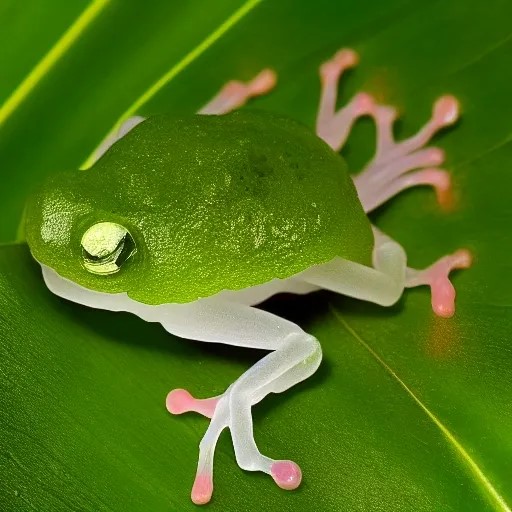
Glass Frogs Hide Their Blood to Become Nearly Invisible
The glass frog has transparent skin that reveals its beating heart, but when it naps, it stashes 89% of its red blood cells inside its liver and practically vanishes.

Weird Facts
Humans Glow in the Dark, Just Too Faintly to See
Your body is emitting real visible-spectrum photons right now ? not heat, actual light ? but detecting it requires a camera sensitive enough to spot a candle from 10 miles away.

Weird Facts
Polar Bears Are Not Actually White — They're Transparent
Polar bear fur isn't white at all — every single hair is colorless and hollow, like a tiny fiber optic cable, and the skin underneath is completely black.
Weird Facts
T-Rex Never Met a Stegosaurus ? They Missed Each Other by 80 Million Years
The Stegosaurus went extinct roughly 83 million years before T-Rex even existed, making those two famous dinosaurs more separated in time than T-Rex and you.