The World's Most Patient Snack: Honey Never Expires
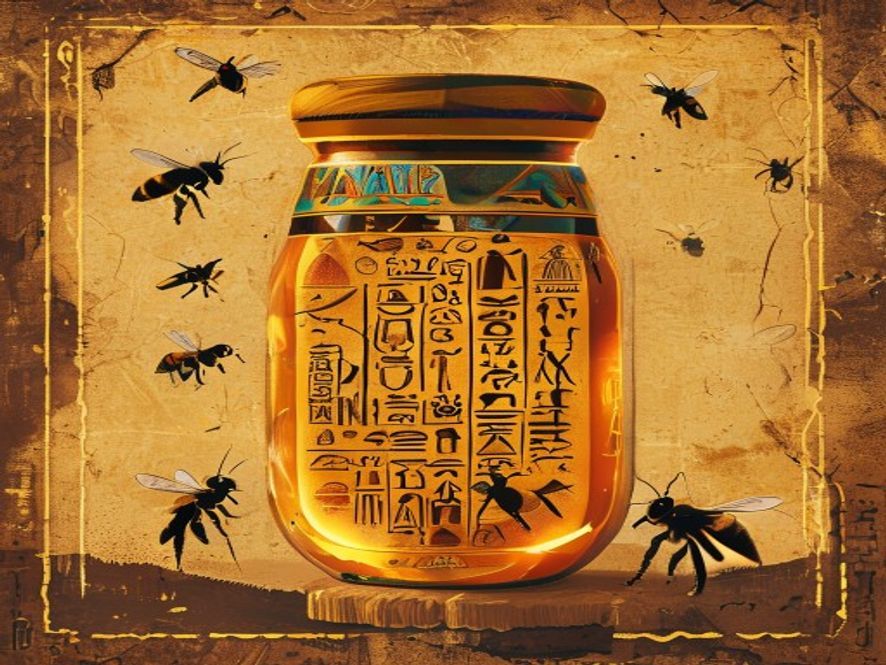
When archaeologists excavated ancient Egyptian tombs, they stumbled upon something unexpected alongside the gold artifacts and mummified cats: sealed pots of honey, roughly 3,000 years old, still perfectly preserved and completely safe to eat. That's not a typo. Three thousand years. Your leftovers can barely survive a Tuesday.
Honey's immortality comes down to chemistry. It's naturally acidic, extremely low in moisture, and loaded with hydrogen peroxide — a combination so hostile to bacteria that microbes simply give up and go home. Seal it properly and you've basically created the world's most delicious time capsule.
There's one small catch: honey can crystallize over time, turning from liquid gold into something resembling a geology exhibit. But that's purely cosmetic. A quick warm-water bath brings it right back to its silky, spreadable self. No magic required, just mild physics.
So next time someone eyes your pantry jar suspiciously because the best-by date was last year, feel free to inform them that bees have been solving this problem since long before anyone invented expiration labels. Honey doesn't expire. It just waits.
More from Weird Facts

Weird Facts
Humans Glow in the Dark, Just Too Faintly to See
Your body is emitting real visible-spectrum photons right now ? not heat, actual light ? but detecting it requires a camera sensitive enough to spot a candle from 10 miles away.

Weird Facts
Polar Bears Are Not Actually White — They're Transparent
Polar bear fur isn't white at all — every single hair is colorless and hollow, like a tiny fiber optic cable, and the skin underneath is completely black.

Weird Facts
T-Rex Never Met a Stegosaurus ? They Missed Each Other by 80 Million Years
The Stegosaurus went extinct roughly 83 million years before T-Rex even existed, making those two famous dinosaurs more separated in time than T-Rex and you.

Weird Facts
Honey Never Expires (And We Mean Never)
Archaeologists cracking open ancient Egyptian tombs have found 3,000-year-old honey still perfectly edible ? turns out honey is basically the immortal snack of the food world.