Flamingos Are Born Gray and Slowly Dye Themselves Pink
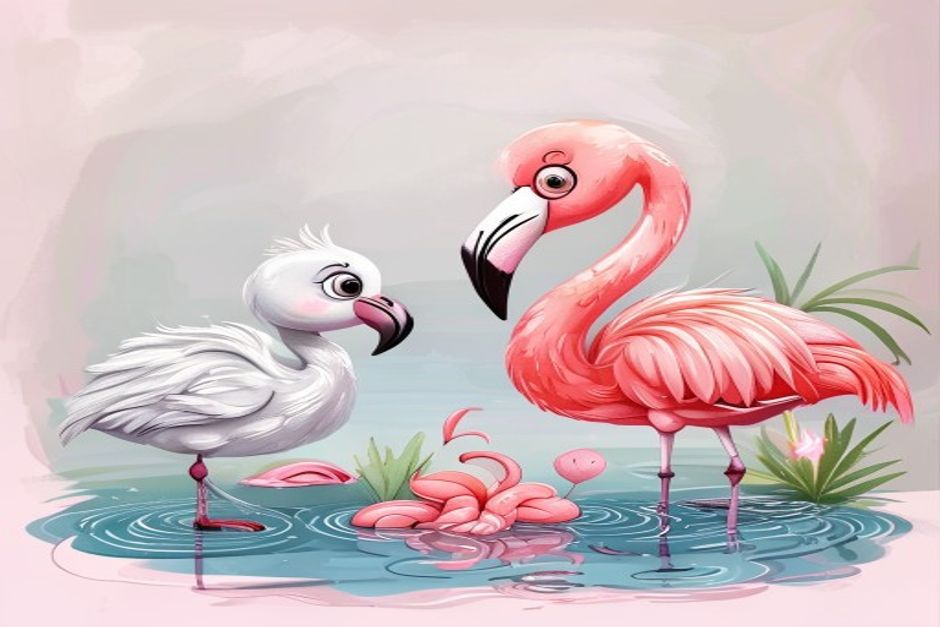
If you've ever admired a flock of pink flamingos and assumed they hatched that way, think again. Baby flamingos are born a perfectly plain gray or white, looking nothing like their vivid parents. The famous pink color only begins appearing after several months of eating the carotenoid-rich algae and brine shrimp that make up the bulk of their diet.
Carotenoids are the same family of pigments that give carrots their orange hue and tomatoes their red. When flamingos digest these compounds, their bodies can't fully break them down — so the pigments get deposited directly into their feathers, skin, and even their bill. In a very literal sense, a flamingo paints itself pink one meal at a time.
Zoo flamingos that aren't fed the right diet will actually fade to white over time. Wildlife managers figured this out the hard way when captive birds started losing their color, and the fix turned out to be surprisingly simple: more shrimp and spirulina on the menu. Color-appropriate flamingo cuisine is now a serious branch of avian nutrition science.
The phrase "you are what you eat" has never been more perfectly illustrated than by the flamingo. It's the only creature that actively self-dyes using its lunch — which sounds wildly inefficient but is, honestly, extremely glamorous.
More from Weird Facts

Weird Facts
Humans Glow in the Dark, Just Too Faintly to See
Your body is emitting real visible-spectrum photons right now ? not heat, actual light ? but detecting it requires a camera sensitive enough to spot a candle from 10 miles away.

Weird Facts
Polar Bears Are Not Actually White — They're Transparent
Polar bear fur isn't white at all — every single hair is colorless and hollow, like a tiny fiber optic cable, and the skin underneath is completely black.
Weird Facts
T-Rex Never Met a Stegosaurus ? They Missed Each Other by 80 Million Years
The Stegosaurus went extinct roughly 83 million years before T-Rex even existed, making those two famous dinosaurs more separated in time than T-Rex and you.

Weird Facts
Honey Never Expires (And We Mean Never)
Archaeologists cracking open ancient Egyptian tombs have found 3,000-year-old honey still perfectly edible ? turns out honey is basically the immortal snack of the food world.