Carrots Were Purple Until the Dutch Got Involved
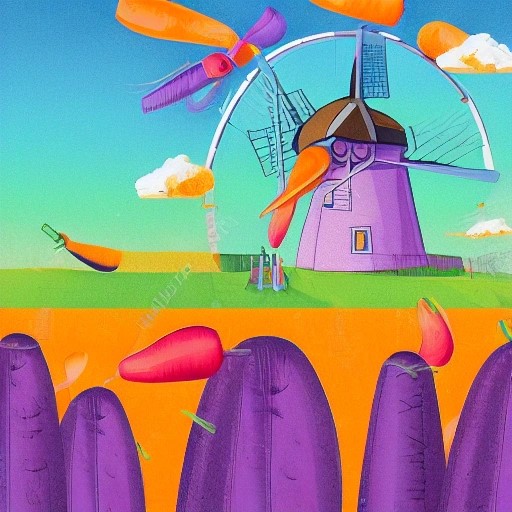
The orange carrot you stuff into your lunchbox didn't come from nature's default setting. Wild carrots were originally purple, white, and yellow — and perfectly happy about it. The orange variety was developed in the Netherlands during the 17th century, likely bred from yellow and white carrots, and steadily replaced its more colorful ancestors across Europe.
The leading folk theory says Dutch growers bred orange carrots to honor William of Orange, the Dutch royal house. Historians debate how intentional this color tribute actually was, but the timing is suspiciously patriotic and everyone agrees it makes a great story. At minimum, the Dutch definitely popularized the orange version with impressive enthusiasm.
The genetic twist? Purple carrots get their color from anthocyanins — the same pigment in blueberries. Orange carrots owe their color to beta-carotene, which also happens to be a precursor to vitamin A. So the color swap was, accidentally, a nutritional upgrade too.
Today you can buy heritage purple, yellow, red, and white carrots at any farmers market trying to seem fancy. They taste essentially the same, but they do come with a very satisfying "well, actually" story for your next dinner party.
More from Weird Facts

Weird Facts
Polar Bears Are Not Actually White — They're Transparent
Polar bear fur isn't white at all — every single hair is colorless and hollow, like a tiny fiber optic cable, and the skin underneath is completely black.
Weird Facts
T-Rex Never Met a Stegosaurus ? They Missed Each Other by 80 Million Years
The Stegosaurus went extinct roughly 83 million years before T-Rex even existed, making those two famous dinosaurs more separated in time than T-Rex and you.

Weird Facts
Honey Never Expires (And We Mean Never)
Archaeologists cracking open ancient Egyptian tombs have found 3,000-year-old honey still perfectly edible ? turns out honey is basically the immortal snack of the food world.

Weird Facts
A Blue Whale's Heart Is the Size of a Small Car
The largest heart on Earth weighs as much as a motorcycle, pumps just twice per minute during deep dives, and its aorta is wide enough for a small child to crawl through.